Baitcasting vs Spinning Reels: Which Should You Buy First?
By Mark Ellison · Published · 3 min read
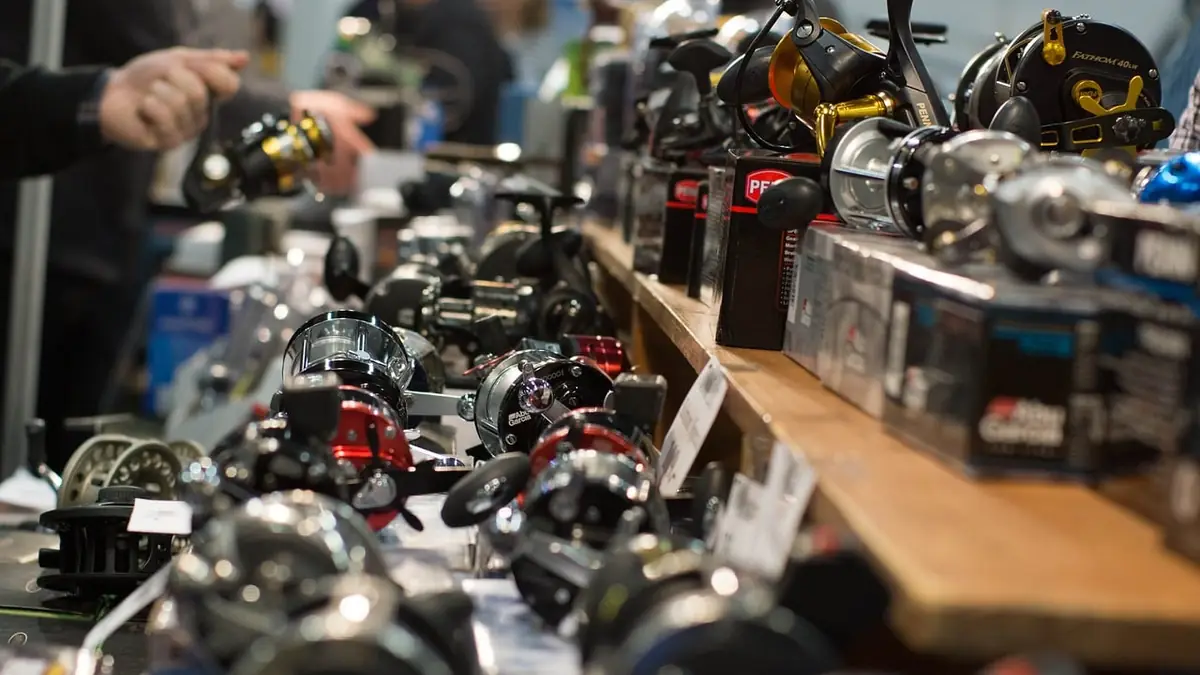
Walk into any tackle shop and you'll see two main reel types: spinning and baitcasting. Both cast lures and fight fish, but they work differently and suit different anglers. If you're buying your first serious setup, the choice can feel overwhelming.
This guide breaks down the real-world differences—learning curve, cost, and typical use cases—so you can decide which reel to buy first. We'll skip the marketing hype and focus on what matters when you're actually on the water.
How They Work: The Core Difference
A spinning reel hangs beneath the rod. You open a bail, hold the line with your index finger, and cast. The line spills off a fixed spool with minimal friction. This design is forgiving: even if you mishandle the cast, the line usually just stops rather than tangling into a bird's nest.
A baitcasting reel sits on top of the rod. The spool rotates during the cast, and your thumb controls its speed. That direct control gives you pinpoint accuracy and the ability to stop a lure mid-air, but it also means a mistimed thumb leads to a backlash—a tangle that can take minutes to clear. The mechanics are simple; the timing is not.
- Spinning: fixed spool, bail, line hangs below rod
- Baitcasting: rotating spool, thumb control, line guides on top
- Spinning is more forgiving for beginners
- Baitcasting offers greater casting accuracy
Learning Curve: Which Is Easier to Master?
Spinning reels are easier to learn. Most people can make a reasonable cast within 10–15 minutes of instruction. The main skills are opening the bail, trapping the line, and releasing at the right moment. Backlashes are rare, and when they happen, they're usually mild.
Baitcasting reels demand more practice. Expect to spend several hours—often across multiple trips—before you can cast without constant thumbing. Backlashes are part of the process. Many anglers start with the brakes set high and gradually loosen them as they gain confidence. The payoff is worth it for some, but it's a commitment.
- Spinning: basic cast in 10–15 minutes
- Baitcasting: several hours to basic proficiency
- Baitcasting requires thumb control on every cast
- Start with high brake settings on baitcasters
Cost: What Will You Actually Spend?
You can find decent spinning reels for $30–$60. A $40 spinning reel will handle most freshwater fishing and even light saltwater. Baitcasting reels start around $50–$80 for entry-level models, but the sweet spot for reliability is closer to $100–$150. Cheap baitcasters often have poor braking systems, making the learning curve steeper.
Beyond the reel, baitcasting rods tend to cost slightly more because they need more guides and a different spine. A complete spinning setup can be ready for $80–$120; a comparable baitcasting setup runs $120–$200. If budget is tight, spinning wins.
- Spinning reel: $30–$60 for decent quality
- Baitcasting reel: $50–$80 entry, $100–$150 reliable
- Complete spinning setup: $80–$120
- Complete baitcasting setup: $120–$200
Typical Use Cases: When to Choose Each
Spinning reels excel with light lures (under 1/4 oz), finesse techniques, and windy conditions. They're the go-to for panfish, trout, and light bass fishing. If you fish from a kayak or canoe, spinning is often more practical because you can cast one-handed while managing the boat. For a deeper look at boat-specific gear, see Trolling Motor Basics for Small Fishing Boats and Kayaks.
Baitcasting reels shine with heavier lures (1/4 oz and up), heavy cover, and situations that demand accuracy. They're popular for bass fishing, pike, and saltwater. The thumb control lets you skip lures under docks or cast precisely to a target. If you plan to fish heavy cover or big swimbaits, baitcasting is the better long-term choice.
- Spinning: light lures, finesse, wind, kayak fishing
- Baitcasting: heavy lures, accuracy, heavy cover
- Spinning is better for beginners and tight budgets
- Baitcasting suits power fishing and precision
Maintenance and Durability
Both types need basic care: rinse after saltwater, oil the bearings occasionally, and store properly. Spinning reels have more exposed moving parts (bail, line roller) that can collect sand and grit. Baitcasting reels have enclosed spools but more internal parts, and the braking system may need adjustment over time.
For long-term storage, loosen the drag on both types to prevent flat spots on the drag washers. If you're putting gear away for the season, follow our guide on storing fishing rods and reels off-season to avoid damage. Neither reel type is inherently more durable—it comes down to quality and care.
Making the Decision: A Practical Framework
If you're new to fishing and want to spend more time fishing than untangling, start with a spinning reel. It's cheaper, easier, and versatile enough for most freshwater species. You can always add a baitcaster later when you have specific needs.
If you already know you'll be chasing bass in heavy cover, throwing big lures, or fishing from a boat where accuracy matters, a baitcaster could be your first reel—but budget for a good one and practice in an open area before hitting the water. Either way, match the reel to your rod's power and the lures you plan to throw.
- Choose spinning for simplicity, low cost, and light lures
- Choose baitcasting for accuracy, heavy lures, and power fishing
- Match reel size to rod power and line weight
- Practice baitcasting in an open field before fishing
| Factor | Spinning Reel | Baitcasting Reel |
|---|---|---|
| Learning time to basic cast | 10–15 minutes | Several hours |
| Typical entry price | $30–$60 | $50–$80 |
| Complete setup cost | $80–$120 | $120–$200 |
| Best lure weight | Under 1/4 oz | 1/4 oz and up |
| Casting accuracy | Moderate | High |
| Backlash risk | Low | High (during learning) |
| Ideal for | Beginners, light lures, wind | Accuracy, heavy cover, power fishing |
- Spinning reels are easier to learn and cheaper to start with.
- Baitcasting reels offer better accuracy and handle heavy lures well.
- Budget at least $100–$150 for a reliable baitcasting reel.
- Start with spinning unless you have a specific need for baitcasting.
Mark has spent years fishing and paddling across rivers and lakes, testing gear in real conditions. He focuses on practical buying advice for beginners and occasional anglers. His goal is to help readers avoid overspending and choose equipment that fits their actual use.