Canoe vs Kayak for Beginners: Which Boat Fits Your Plans?
By Mark Ellison · Published · Updated · 4 min read
Most first-time buyers walk into a shop or a used listing with the same question: canoe or kayak? The honest answer depends less on which boat is "better" and more on where you'll paddle, how much gear you carry, and how you'll get the boat to the water.
This guide compares the two on the things that actually decide whether you enjoy your first season: stability at your skill level, load capacity, paddling efficiency, transport, and total cost. Numbers below are typical ranges for recreational models, not marketing claims.
Stability: Primary vs Secondary Matters More Than Width
Beginners usually mean "primary stability" when they say stable: the resistance a hull gives to tipping when you sit still. Flat-bottomed canoes and wide recreational kayaks (28–32 inches across) feel rock-solid at rest. Narrow touring kayaks and solo canoes feel twitchy when still but stiffen up as they lean, which is secondary stability.
That second quality is what saves you on a windy lake. A hull that hardens its edge as it tilts 15–20 degrees gives you warning and time to correct. Boats that feel glued-flat at rest can go from fine to wet very quickly once the chine passes the waterline.
For a first boat, sit in it before buying if you can. Sit-on-top kayaks around 30–34 inches wide and canoes 32–36 inches wide at the beam are forgiving for adults up to roughly 220 pounds. Anything under 26 inches wide rewards a learned hip flick you probably don't have yet.
- Sit-on-top kayak: highest primary stability, self-draining, easy to remount
- Recreational sit-in kayak: stable at 28+ inch beam, drier ride, harder to re-enter
- Solo canoe: high secondary stability once loaded, tippy when empty
- Tandem canoe: very stable loaded, awkward to paddle solo in wind
Capacity: Canoes Win on Gear, Kayaks Win on Simplicity
A typical 16-foot tandem canoe carries 700–900 pounds of paddlers and gear; a 14-foot solo canoe handles 400–500 pounds. Recreational kayaks are rated around 250–350 pounds, and much of that gets eaten by the paddler. If you weigh 200 pounds, a 300-pound-rated kayak leaves you about 100 pounds for gear, water, and a dog.
That math matters for camping and fishing. A canoe lets you bring a cooler, a camp chair, a full tackle box, and a tarp without a fight. Kayaks push you toward ultralight thinking and dry bags lashed to deck rigging.
Kayaks do have a storage advantage in one sense: sealed hatches and bulkheads keep gear dry when waves splash over the deck. In an open canoe, anything you don't want wet needs its own dry bag, and you'll want a painter line and float bags in case of a capsize.
- Tandem canoe: 700–900 lb capacity, open cargo space
- Solo canoe: 400–500 lb, good for one paddler plus a weekend kit
- Sit-on-top kayak: 300–400 lb, tank well and hatch storage
- Recreational sit-in kayak: 250–350 lb, bow and stern hatches on better models
Speed and Effort: Where Each Hull Pays You Back
On flat water, a 16–17 foot touring kayak cruises at 3.5–4.5 mph with steady effort, and a 16-foot tandem canoe with two competent paddlers holds 3–4 mph. A 10-foot recreational kayak sits closer to 2–2.5 mph. The gap comes from waterline length and hull efficiency, not from paddle type.
Wind is the canoe's weak point. High sides catch air, and a lightly loaded canoe gets pushed around on open water. Kayaks sit low, so a headwind costs you effort but not control.
For small rivers and twisty creeks, the short kayak wins again: 10–12 feet turns in tight water where a 16-foot canoe needs a sweep stroke and room. If your water is a narrow, fallen-tree creek, buy the short boat.
- Touring kayak: 3.5–4.5 mph cruise, best into wind and chop
- Tandem canoe: 3–4 mph with two paddlers, efficient per person
- Recreational kayak: 2–2.5 mph, easy but slow over distance
- Short canoe: maneuverable, but tracks poorly in open water
Transport and Storage: The Costs People Forget
A 10-foot recreational kayak fits in a short-bed pickup with the tailgate down and weighs 40–55 pounds, so one person can car-top it. A 16-foot canoe weighs 60–85 pounds in polyethylene or 40–55 in composites, and it needs proper crossbars spaced 4–6 feet apart plus bow and stern tie-downs.
Roof rack setups, saddles, and straps run roughly $150–$500 depending on whether your vehicle already has rails. If you're still working that out, our guide to kayak roof rack setup and costs covers bar spread, saddles, and strap choices. A used trailer adds $400–$1,200 but makes a heavy canoe a one-person job.
Storage is the quiet dealbreaker. A 12-foot kayak can hang on a garage wall; a 16-foot canoe needs 17 feet of clear space or a hoist. Apartment dwellers should price a rental or a folding option before committing.
Fishing and Days on the Water
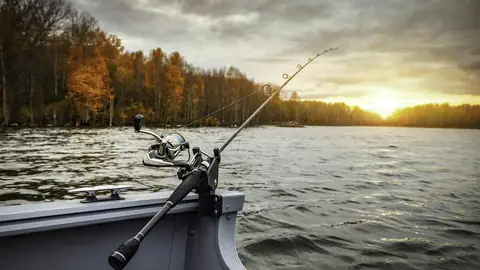
Kayaks dominate modern fishing for a reason: hands-free control with a paddle, pedal drives on higher-end models, and the ability to hold position in current with a small anchor trolley. Standing to cast is possible on wide sit-on-tops rated for it, usually 32 inches and up.
Canoes shine for two-person fishing and long days with lots of tackle. One paddler can hold the boat steady while the other casts, and there's room for a cooler and a landing net that isn't clipped to your vest. Solo canoe fishing works well with a double-blade paddle and a kneeling thwart.
If fishing is the main plan, budget for the accessories as seriously as the hull. Our seasonal gear maintenance schedule keeps reels, PFDs, and hulls in shape between trips, and a realistic look at what a beginner kayak setup really costs helps you see the full number before you buy.
- Sit-on-top kayak: best solo fishing platform, easy re-entry
- Tandem canoe: best for two anglers and bulky tackle
- Add: anchor trolley ($30–$80), PFD, paddle leash, dry bag
- Skip: standing platforms on narrow hulls under 30 inches
| Boat type | Length | Weight | Capacity | Typical new price |
|---|---|---|---|---|
| Recreational sit-in kayak | 10–12 ft | 40–50 lb | 250–300 lb | $350–$700 |
| Sit-on-top kayak | 11–13 ft | 55–70 lb | 300–400 lb | $500–$1,000 |
| Touring kayak | 14–17 ft | 50–60 lb | 300–350 lb | $900–$1,800 |
| Solo canoe | 14–15 ft | 45–60 lb | 400–500 lb | $800–$1,600 |
| Tandem canoe | 16–17 ft | 60–85 lb | 700–900 lb | $900–$1,800 |
Matching the Boat to Your Water
Write down your three most common trips before you shop: a sheltered lake, a slow river, a coastal bay, a narrow creek. A 12-foot recreational kayak covers lakes and slow rivers well. A 14–16 foot touring kayak handles big open water. A 16-foot tandem canoe covers lake camping and family paddling. A 12–14 foot solo canoe suits quiet rivers and solo trips with gear.
Buy used for a first boat if you can inspect the hull. Look for deep gouges, oil-canning (dents that don't pop back), and UV chalkiness on polyethylene. A used boat in good shape at 50–60 percent of new price is the smartest first purchase most people make.
Whatever you choose, budget for a properly fitted PFD, a spare paddle or two, and a throw bag on moving water. Those items matter more to your safety than the hull debate ever will.
- Choose a canoe if you carry heavy gear, paddle with a partner, or fish from the boat with lots of tackle.
- Choose a kayak if you paddle solo, face wind and chop, or need a boat that fits a small vehicle and garage.
- Sit in or test-paddle before buying; beam width and hull shape matter more than brand.
- Budget $150–$500 for transport gear and leave room for a fitted PFD and spare paddle.
Mark has spent years fishing and paddling across rivers and lakes, testing gear in real conditions. He focuses on practical buying advice for beginners and occasional anglers. His goal is to help readers avoid overspending and choose equipment that fits their actual use.