Paddling Safety Checklist: PFDs, Weather, and Float Plans
By Mark Ellison · Published · 6 min read
Most paddling accidents are boring in hindsight: a life jacket left in the truck, a wind that came up an hour early, a route nobody else knew about. The gear is simple and the decisions are simpler still, but both need to happen before your boat touches water, not after.
This checklist covers the three things that matter most on any kayak or canoe trip: a properly fitted PFD, honest weather and water limits, and a float plan someone on shore can act on. Work through it at the car or the launch, every trip, until it becomes habit.
Fit and Wear Your PFD Before Launch
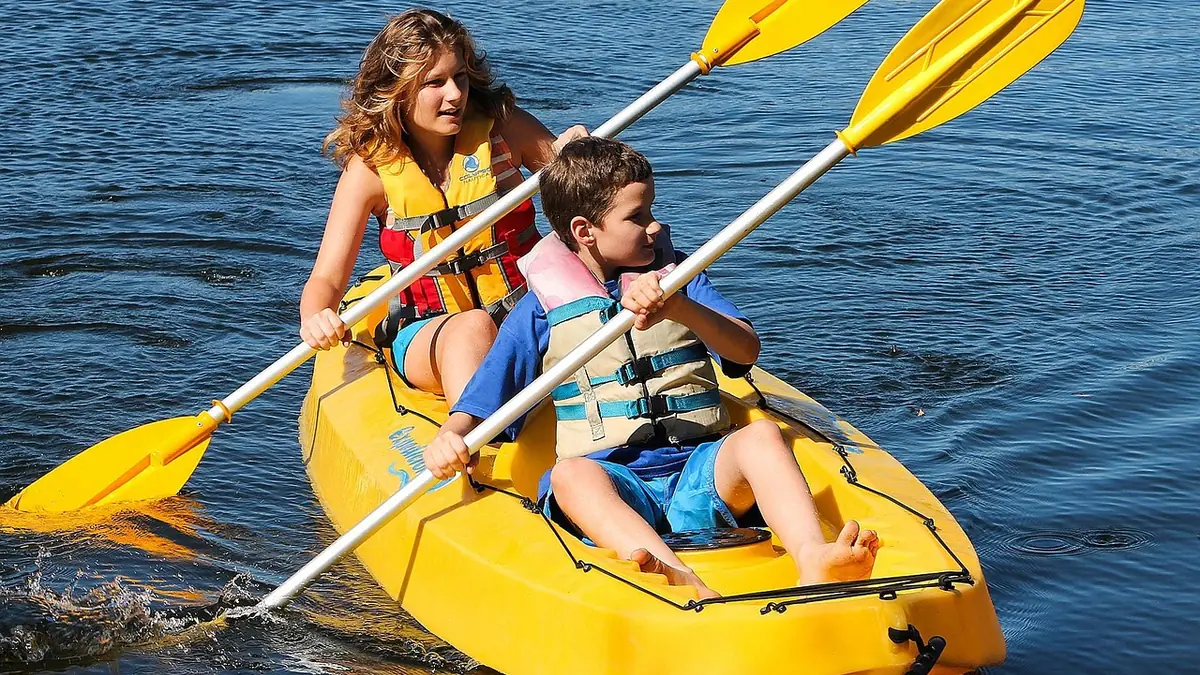
A PFD only works if it stays on and stays put. In most jurisdictions, a wearable life jacket is legally required for each person on board, and it must fit the wearer, not just be present. Check the label for the wearer's weight range and chest size, then adjust the side straps and shoulder straps snug enough that the jacket cannot be pulled up over the head.
Do the tug test: grab the shoulders and pull upward firmly. If the jacket rides up past your ears, it is too loose. Try it on over the layers you will actually paddle in, because a bulky dry suit or rain jacket changes the fit. Children need a PFD checked every trip, since they grow out of sizes quickly and often fidget straps loose.
Choose the right type for the water. A low-profile recreational vest is comfortable for flatwater and calm bays; a high-flotation vest with a collar suits rough water, whitewater, and open coast. Inflatable belt packs are compact and popular with anglers, but they require the wearer to be conscious and able to pull the cord, and they need regular cartridge checks.
- Tug the shoulder straps; the jacket should not ride above your ears
- Re-check fit over the layers and dry suit you will actually wear
- Children get a fresh fit check every single trip
- Inflatable belts need a visible, in-date cartridge and a manual pull you can reach
Set Weather and Water Limits in Advance
Decide your limits before you leave home so the decision is not made in a parking lot with friends waiting. For most beginner and intermediate paddlers, sustained wind around 10-12 mph (roughly 9-10 knots) is a sensible ceiling on open water, and gusts 5 mph above that should make you reconsider. Wind against current is what turns a pleasant lake into hard work and confused chop.
Water temperature matters more than air temperature. Cold water below about 60 F (15 C) demands a wetsuit or dry suit and a fast self-rescue plan, because immersion can steal your breathing and grip within minutes. A 70 F day with 50 F water is a cold-water day, not a warm one.
Check the forecast the evening before and again at the launch, and watch for wind shifts, thunderstorms, and fog. On the water, set a turnaround time tied to conditions, not to how much fun you are having. If the wind builds or thunderheads form, head in early; there is no prize for finishing the loop.
- Sustained wind around 10-12 mph is a practical ceiling for most recreational paddlers
- Treat water under about 60 F as cold water and dress for immersion
- Set a turnaround time and stick to it
- Leave the water at the first thunder or building wind line
File a Float Plan Someone Can Use
A float plan is a short message telling a trusted person where you are going, when you will launch, when you expect to return, and what to do if you are late. It does not need to be formal. A text with the launch site, route, vehicle description, and a check-in time covers it. The critical part is the check-in: if you have not called by the agreed time, that person calls you, then the authorities.
Be specific about the route. "Paddling the lake" is useless; "launching at the north ramp, heading to the island and back, back by 4 pm" gives a search area. Include the number of paddlers, boat colors, and cell signal gaps you expect. If plans change on the water, that is fine, but tell your contact when you get back to cell service.
In remote areas, a personal locator beacon or satellite messenger is worth carrying. It reaches emergency services where a phone will not, and it pairs well with the float plan because it gives rescuers a precise position. Check the battery and registration before the season starts.
- Launch site, route, return time, vehicle and boat description
- Name and phone number of who to call if you are overdue
- Agreed check-in time and what happens if you miss it
- Satellite messenger or PLB for areas without reliable cell coverage
Pack the Safety Gear You Will Actually Use
Beyond the PFD, a small set of gear covers most recreational situations: a bilge pump or bailer, a paddle float and spare paddle for kayaks, a throw bag for moving water, a whistle attached to your PFD, and a light for dusk. A basic first aid kit, sun protection, water, and a charged phone in a waterproof case round it out. Keep it in one dry bag so packing is fast and nothing is forgotten.
Dress for the water, not the air. That means layers that stay warm when wet, a hat, and footwear that will not slip off in a swim. Avoid loose items that can tangle, and secure anything you cannot afford to lose. If you fish from the boat, keep hooks and line organized so a capsize does not turn into a tangle hazard.
Practice the skills before you need them: a wet exit, a self-rescue, and a assisted rescue with a partner. A calm, shallow, supervised setting is ideal. Knowing you can get back in the boat changes how you handle wind, chop, and the moment something goes wrong.
- Bilge pump or bailer, spare paddle, paddle float
- Whistle on the PFD, plus a light for low visibility
- Waterproof phone case and a charged battery
- Layered clothing that stays warm when wet, and secure footwear
Boats, Loads, and Group Discipline
Check the boat before launch: hatches closed and sealed, drain plug in, deck lines and grab handles intact, seat and foot braces secure. Load weight low and centered, and stay within the boat's rated capacity. An overloaded canoe or kayak sits low, takes on water, and handles poorly in chop, which is exactly when you need margin.
If you paddle in a group, agree on a leader, a sweep, and a regrouping point. Paddle close enough to help but far enough to avoid collisions, and keep the slowest boat in the middle of the group rather than at the back. Agree on hand signals and a whistle signal before launch.
Solo paddling is not automatically unsafe, but it removes the easiest rescue. If you go alone, tighten every other margin: calmer water, shorter routes, a more detailed float plan, and gear you have practiced with. The goal is to make the trip boringly predictable.
- Drain plug in, hatches sealed, grab lines intact
- Load weight low and within the boat's rated capacity
- Group leader, sweep, and a regrouping point agreed before launch
- Solo trips get shorter routes and tighter limits
Maintain Gear and Refresh Skills Each Season
Safety gear degrades quietly. PFD foam compresses, straps fray, inflatable cartridges expire, and throw bag ropes stiffen. Inspect everything at the start of the season and again mid-season if you paddle often. Store PFDs hanging, out of direct sun and away from fuel or solvents, and never use them as seat cushions, which crushes the foam.
Pair that inspection with a simple seasonal routine for rods, reels, and paddling gear so nothing sits wet and forgotten. Our fishing and paddling gear maintenance schedule walks through what to check and when, and storing rods and reels off-season covers the cold-month side of the same habit.
Skills also need refreshing. Take a rescue or skills course every few years, practice a wet exit in a pool or calm water each spring, and re-read your local rules on PFDs and required equipment, since they vary by state and water body. The point is not to become an expert; it is to keep the basics automatic under stress.
- Inspect PFD foam, straps, buckles, and inflatable cartridges each season
- Store PFDs hanging, out of sun, never as cushions
- Practice a wet exit and self-rescue every spring
- Re-check local PFD and equipment rules annually
| Condition | Wind | Water temp | What to wear | Extra gear |
|---|---|---|---|---|
| Calm lake or slow river | Under 8 mph | Above 70 F | Quick-dry layers, PFD | Bailer, whistle, water |
| Breezy open water | 8-12 mph | 60-70 F | Wetsuit or layered synthetics | Spare paddle, pump, float |
| Cold-water shoulder season | Under 10 mph | 50-60 F | Wetsuit or dry suit | PLB, dry bag, warm hat |
| Cold water, open coast | Under 8 mph | Below 50 F | Dry suit with insulation | Satellite messenger, tow line |
| Moving water, class I-II | Any, but watch gusts | Any | Wetsuit or dry suit | Throw bag, helmet, rescue skills |
- Wear a fitted PFD and do the tug test every trip
- Set wind and water-temperature limits before you leave home
- File a float plan with a check-in time someone will enforce
- Practice rescues and inspect gear at the start of every season
Mark has spent years fishing and paddling across rivers and lakes, testing gear in real conditions. He focuses on practical buying advice for beginners and occasional anglers. His goal is to help readers avoid overspending and choose equipment that fits their actual use.