Trout and Salmon Fishing: A Beginner's Guide
- By Mark Ellison
- Published
- 3 min read
Trout and salmon are among the most sought-after freshwater game fish in North America. They offer a unique challenge: they're wary, strong fighters, and often live in beautiful, remote places. Whether you're chasing native brook trout in a small mountain stream or migrating salmon in a big river, the fundamentals are similar.
This guide covers the core knowledge you need to get started: the right gear, where to find fish, how seasons and regulations affect your trip, and the techniques that actually catch fish. We'll skip the fluff and give you practical, field-tested advice.
Key points
- Match your gear to the species and water type—light for trout, heavier for salmon.
- Focus on cold water (50–65°F) and structure; fish are predictable.
- Check regulations every trip; seasons and limits vary widely.
- Handle fish ethically and avoid fishing when water is too warm.
Understanding Trout and Salmon Behavior
Trout and salmon are coldwater fish. They thrive in water temperatures between roughly 50°F and 65°F. When water gets warmer than 68°F, trout become stressed and feeding slows; many anglers avoid fishing for them in those conditions to reduce mortality. Salmon are similarly temperature-sensitive but often stage in cooler, deeper pools during warm spells.
These fish are also cover-oriented. They hold near structure like undercut banks, boulders, fallen trees, and riffle seams where food washes through. In lakes, they suspend at specific depths based on temperature and forage. Learning to read water—where the current breaks, where depth changes—is more valuable than any fancy lure.
- Cold water (50–65°F) is prime; carry a thermometer.
- Fish hold near structure: rocks, logs, undercut banks.
- In lakes, find the thermocline and troll or jig at that depth.
- Early morning and late evening are best in summer.
Essential Gear for Trout and Salmon
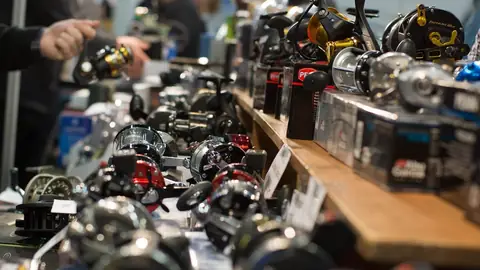
For trout, a light spinning rod (5–6 feet, medium-light power) paired with a 1000–2500 size reel spooled with 4–8 lb line is versatile. Fly anglers often use a 4- to 6-weight rod. For salmon, step up to a medium-heavy rod (7–9 feet) with a 3000–4000 size reel and 10–20 lb line. Braid is popular for its sensitivity and strength, but monofilament or fluorocarbon leaders are common for finicky fish.
Terminal tackle should include small spinners (size 0–2), spoons, jigs, and bait hooks. For bait, worms, salmon eggs, and cured roe are classics. If you're fly fishing, nymphs, streamers, and egg patterns work well. Don't forget a landing net, forceps, and a good pair of polarized sunglasses to spot fish and see underwater structure.
- Trout: 5–6 ft medium-light spinning rod, 4–8 lb line.
- Salmon: 7–9 ft medium-heavy rod, 10–20 lb line.
- Carry spinners, spoons, jigs, and bait.
- Polarized sunglasses are a game-changer for spotting fish.
Reading Water: Streams, Rivers, and Lakes
In streams and rivers, trout position themselves in spots where they can hold without expending much energy but still have access to food. Look for foam lines, current seams, eddies behind rocks, and deep pools. Salmon often run up riffles and rest in deeper holding water. Approach quietly—trout have a wide field of view and can sense vibrations.
In lakes, trout and salmon relate to temperature and baitfish schools. In spring and fall, they're often shallow; in summer, they go deep. Use a fish finder or study depth maps to locate drop-offs and underwater points. Trolling slowly with spoons or crankbaits is a proven method to cover water and find active fish.
Seasons, Regulations, and Ethics
Trout and salmon seasons vary widely by region and water body. Many streams have a closed season during spawning (typically fall for brook trout, winter for some salmon). Always check your local regulations for open dates, bag limits, size restrictions, and gear rules. Some waters are catch-and-release only or have special tackle restrictions.
Ethical angling matters: handle fish with wet hands, keep them in the water as much as possible, and release quickly. If you're keeping fish, dispatch them humanely and bleed them immediately for better table fare. Avoid fishing when water temps exceed 68°F—fish are already stressed, and survival rates after release drop sharply.
- Check state/provincial regulations for seasons and limits.
- Many spawning streams close in fall; respect closures.
- Use wet hands and release fish quickly.
- Avoid trout fishing when water exceeds 68°F.
Techniques That Catch Fish
For trout in streams, drifting a worm or salmon egg through a pool is a classic. Cast upstream and let it tumble naturally. Spinners and spoons work well in deeper runs—cast across and retrieve steadily. Fly anglers should dead-drift nymphs along seams or swing streamers through pools.
For salmon, casting spoons or spinners in holding water can trigger aggressive strikes. In rivers, float fishing with roe or beads is deadly. In lakes, trolling with downriggers or lead core line gets your lure to the right depth. Match your presentation to the fishes' mood: slow and subtle in cold water, faster and flashier when they're active.
| Target Species | Rod Length | Rod Power | Reel Size | Line Weight |
|---|---|---|---|---|
| Trout (streams) | 5–6 ft | Medium-light | 1000–2500 | 4–8 lb |
| Trout (lakes) | 6–7 ft | Medium-light | 2000–3000 | 6–10 lb |
| Salmon (rivers) | 7–9 ft | Medium-heavy | 3000–4000 | 10–20 lb |
| Salmon (lakes) | 7–8 ft | Medium | 3000–4000 | 10–15 lb |
Safety and Comfort
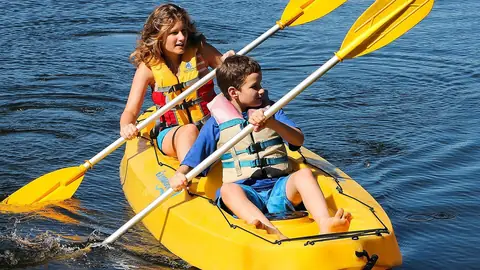
Trout and salmon fishing often takes you to remote, cold, and fast-moving water. Wear a life jacket when in a boat or near deep water. Waders with a wading belt and studded boots are essential for traction. Carry a wading staff for stability in strong currents. Dress in layers—weather can change quickly.
Bring a basic first-aid kit, a headlamp, and a way to communicate (phone or satellite messenger) if you're off-grid. Let someone know your plans. And remember: the best fishing trips are the ones where you come home safe.
Editor
Mark has spent years fishing and paddling across rivers and lakes, testing gear in real conditions. He focuses on practical buying advice for beginners and occasional anglers. His goal is to help readers avoid overspending and choose equipment that fits their actual use.