Ice Fishing Gear: Tackle, Clothing, and Safety Checklist
By Mark Ellison · Published · 5 min read
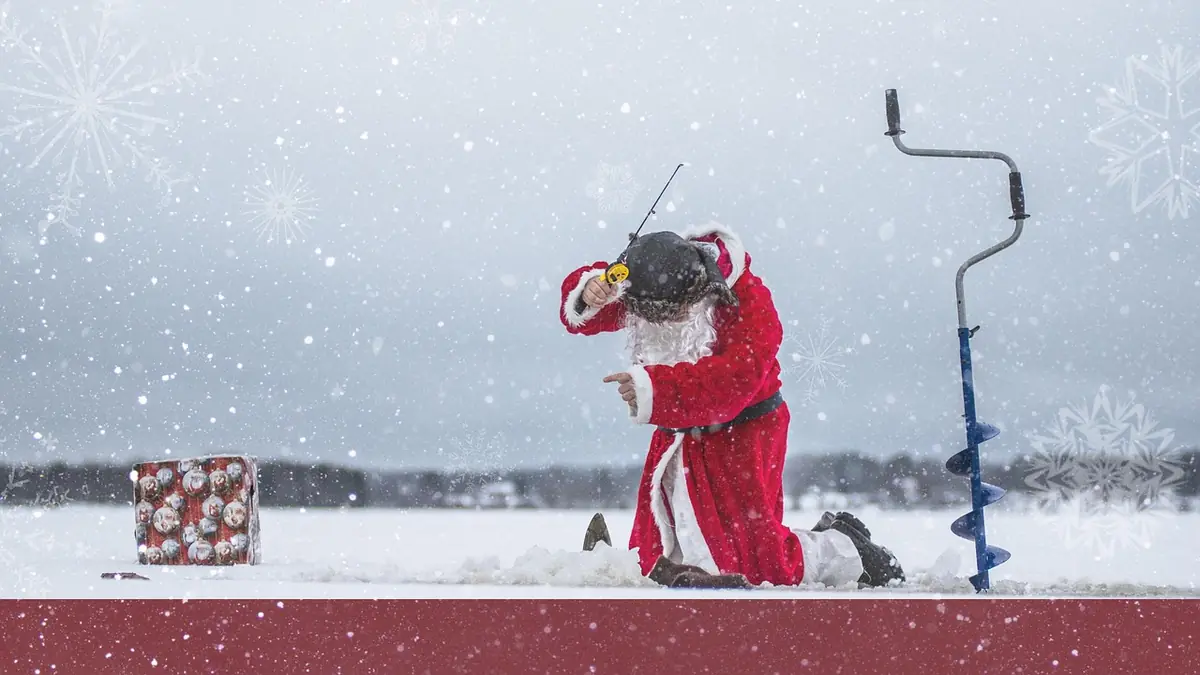
Ice fishing looks minimal from shore—a bucket, a short rod, a hole in the ice. In practice, the gear list runs longer than open-water fishing, because everything has to work in freezing temperatures, fit into a sled or car trunk, and keep you safe on ice you can't see through.
This guide covers the tackle that actually catches fish through the ice, the clothing and shelter that keep you fishing past the first hour, and the safety gear that should never be optional. If you're building from scratch, the checklist at the end shows where to spend first and where to wait.
Rod, Reel, and Line for Hard Water
Ice rods are short by design—typically 24 to 36 inches—so you can fish inside a shelter while sitting on a bucket or a folding chair. Action matters more than length: a medium-light rod with a sensitive tip handles panfish and walleye jigs, while a medium-heavy rod with a stiffer backbone is the better choice for lake trout, pike, or big walleye in deeper water. Most anglers end up owning two or three rods rather than one compromise rod.
Reels are usually simple: an inline reel or a small spinning reel spooled with 2 to 6 lb monofilament for panfish, or 8 to 12 lb line or a short fluorocarbon leader for bigger species. Braid with a fluorocarbon leader has become common because it doesn't coil in cold weather. Whatever you choose, fill spools a bit less than you would in summer to reduce line slap and freeze-up at the guides.
Jigs do most of the work. A starter box of 1/32 to 1/8 oz jigs in a few colors, plus small spoons and a couple of jigging rapala-style baits, covers panfish, perch, and walleye. Live bait—waxworms, spikes, or minnows—is still hard to beat, and a small bait puck or insulated container keeps it usable in subzero wind.
- Medium-light 28–32 in rod: panfish and perch
- Medium or medium-heavy 30–36 in rod: walleye, pike, lake trout
- Inline or small spinning reel with 2–8 lb line
- 1/32–1/8 oz jigs, small spoons, and a few swimming jigging baits
Augers: Hand, Cordless, and Gas
The auger is the single biggest purchase after clothing. A sharp 6- or 7-inch hand auger cuts through 12 to 18 inches of ice in a couple of minutes of steady work and costs a fraction of a power auger. It's the right tool for early ice and for anglers who drill a handful of holes per trip. Keep the blades covered and replace or sharpen them as soon as cutting slows—dull blades turn an easy job into a workout.
Cordless drill augers have taken over the middle ground. A quality 18V or 20V brushless drill with a 6- to 8-inch auger adaptor will drill dozens of holes through a foot of ice on one or two batteries, and the drill doubles as a tool for the rest of the year. Gas augers still make sense for anglers drilling 30 or more holes through thick late-season ice, but they're heavier, louder, and need fuel and maintenance.
- 6–7 in hand auger: light, cheap, fine for up to ~18 in of ice
- Cordless drill + auger adaptor: fast, versatile, bring two batteries
- Gas or propane auger: for 24+ in of ice and lots of holes
- Always tether the auger to something that floats
| Item | Typical Spec | Price Range | Priority |
|---|---|---|---|
| Ice rod and reel combo | 24–36 in, 2–8 lb line | $30–$90 | High |
| Hand auger | 6–7 in, replaceable blades | $60–$120 | High |
| Cordless drill auger | 18–20V brushless + adaptor | $150–$300 | Medium |
| Flasher/sonar | 2D or flasher, 8–12 hr battery | $150–$600 | Medium |
| Hub shelter | 1–2 person, thermal liner | $120–$350 | Medium |
| Float coat/life jacket | USCG approved, wearable | $80–$200 | Essential |
| Ice picks and spud bar | Neck cord picks; 4–5 ft bar | $20–$70 | Essential |
Sonar, Flashers, and Electronics
A flasher or sonar unit changes ice fishing more than any other electronics purchase. It shows your jig, the bottom, and fish reacting in real time, which is exactly what you need when you're staring into a dark hole. Basic flashers start in the low hundreds of dollars; a modern unit with GPS and mapping costs considerably more but helps you find structure and return to productive spots.
Rig the transducer so it hangs level in the hole and keep the cable clear of slush. In shallow water under about 10 feet, turn gain down and use a narrow beam if your unit offers one. Battery life is the practical limit—most units run 8 to 12 hours on a charge in cold weather, less in single-digit temperatures, so carry a spare or a small power bank.
If you fish the same lakes repeatedly, GPS waypoints for weed edges, humps, and drop-offs are worth more than a bigger screen. Mark productive holes as you find them; hard-water spots rarely move far from year to year.
Shelter, Clothing, and Staying Warm
You can fish in the open, but a shelter extends your day and your comfort. Pop-up hubs for one or two anglers weigh 15 to 30 pounds and set up in under a minute; flip-over sled shelters cost more and are heavier but let you move quickly and carry gear inside. For a first shelter, a two-person hub with a thermal liner is a sensible balance of price and warmth.
Clothing should be layered. A moisture-wicking base layer, an insulating mid layer, and a windproof, waterproof outer shell handle most conditions. Insulated waterproof boots rated for well below freezing, wool or synthetic socks, and mittens over liner gloves matter more than a heavy parka. A foam seat pad keeps you off the cold ice, and a thermos of something hot is standard equipment.
Heat sources need respect. A portable propane heater in a sealed shelter can produce carbon monoxide; keep a vent open, and never sleep in a closed shelter with a heater running. Hand warmers and a spare pair of gloves are cheap insurance against numb fingers.
- Two-person thermal hub shelter: light, quick, affordable
- Flip-over sled shelter: mobile, more storage, heavier
- Insulated waterproof boots and mittens over liners
- Ventilated heater use—never a sealed shelter
Safety Gear That Is Not Optional
No fish is worth a fall through the ice. Check ice thickness as you go: roughly 4 inches of clear new ice is generally considered a minimum for one person on foot, 5 to 6 inches for a small group, and far more for any vehicle—but ice is never uniform, and current, springs, and snow cover all weaken it. Clear blue ice is stronger than white ice of the same thickness.
Carry ice picks on a cord around your neck so you can pull yourself out, and wear a float coat or a life jacket over your layers. A throw rope and a spud bar for testing ice belong in the sled. Tell someone where you're going and when you'll return, and go with a partner when possible. On unfamiliar water, follow established tracks and stay away from inlets, outlets, and pressure cracks.
- Ice picks worn around the neck
- Float coat or life jacket over clothing
- Spud bar to test ice ahead of you
- Throw rope, whistle, and a charged phone in a warm pocket
A Starter Checklist and Budget Order
Build in order of safety, then comfort, then electronics. Safety gear comes first and costs relatively little. Shelter and clothing come next, because cold ends trips early. Electronics come last—useful, but you can catch fish without them, and a flasher is easier to buy once you know which depths and species you fish most.
A workable first-season kit—rod and reel, basic jigs, hand auger, ice picks, float coat, boots, and a small shelter—typically lands in the several-hundred-dollar range if you buy deliberately. Add a flasher, a cordless drill auger, and a sled and the total climbs quickly. Buy used where it's safe to do so; shelters and sleds hold up well, but never compromise on flotation or ice picks.
If you're also setting up open-water gear, it's worth reading Baitcasting vs Spinning Reels: Which Should You Buy First? so your off-season purchases complement the ice kit. And when the season ends, store rods and reels properly—see How to Store Fishing Rods and Reels Off-Season Without Damage—so cold-weather line and reels come back out ready to fish.
- Buy safety gear first: ice picks, float coat, spud bar, and a throw rope.
- Two rods—a medium-light and a medium-heavy—cover most ice fishing situations.
- A hand auger is the best first auger; upgrade to cordless drill power as you drill more holes.
- Add electronics after you know your waters; a flasher helps most once you're fishing regularly.
Mark has spent years fishing and paddling across rivers and lakes, testing gear in real conditions. He focuses on practical buying advice for beginners and occasional anglers. His goal is to help readers avoid overspending and choose equipment that fits their actual use.