Bass Fishing Lure Starter Kit: 10 Lures That Cover Most Situations
By Mark Ellison · Published · 3 min read
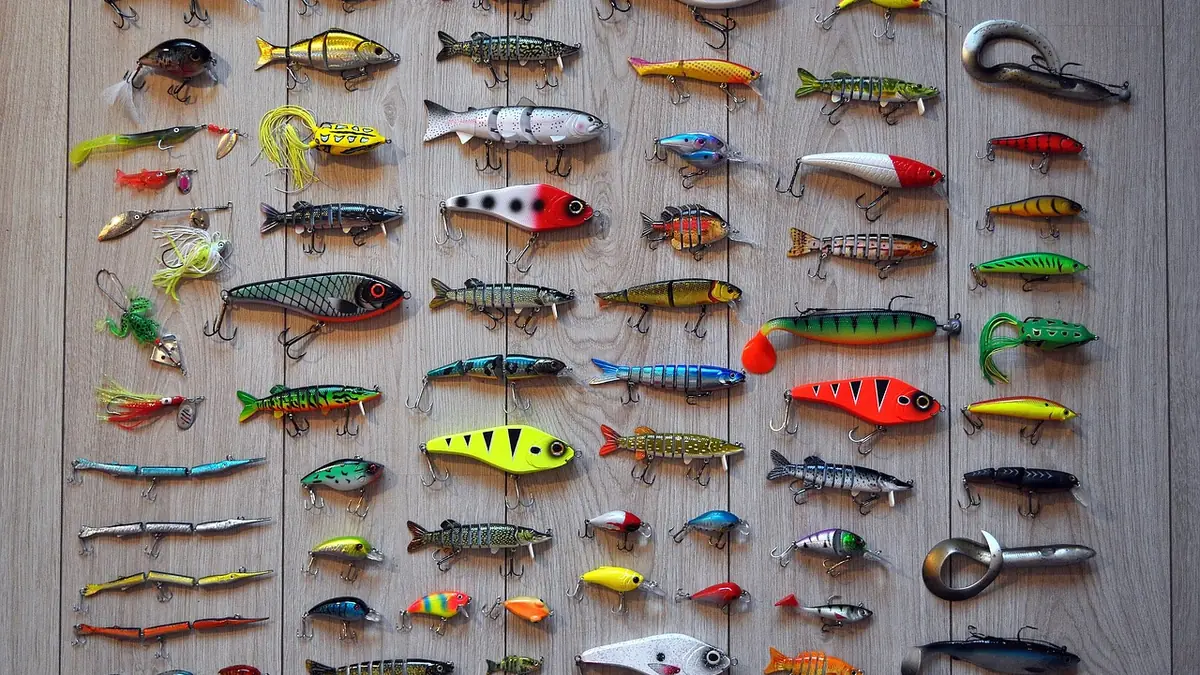
Bass fishing can feel overwhelming when you stare at a wall of lures. The truth is, you don't need dozens of baits to catch bass consistently. A compact kit of about 10 lure types—each in a couple of colors and sizes—will handle most situations you encounter on ponds, reservoirs, and rivers.
This guide focuses on a practical starter kit for largemouth and smallmouth bass. We'll cover soft plastics, hard baits, and terminal tackle, with rough price ranges so you can budget. The goal is versatility: lures that work shallow or deep, clear or muddy water, and across seasons. Pair this with a well-matched rod and reel and you're ready to fish.
Soft Plastics: The Backbone of Any Bass Kit
Soft plastics catch bass year-round and in every water clarity. Start with stickbaits (Senko-style), curly-tail grubs, and creature baits. Stickbaits rigged wacky or Texas-style are deadly in shallow cover; grubs on a jighead work for schooling fish; creatures flip into heavy cover. Buy 6- to 7-inch stickbaits in green pumpkin and black/blue, 4- to 5-inch grubs in smoke and white, and 4-inch creatures in black/blue and watermelon.
Rig them with 3/0 to 5/0 offset worm hooks and 1/8- to 3/8-oz bullet weights for Texas rigs. For wacky rigs, use a 1/0 or 2/0 wacky hook and an O-ring. Soft plastics are cheap—packages run $5–$10—so you can carry several colors without breaking the bank. They're also forgiving for beginners learning hooksets.
- Stickbaits (Senko-style): 5–7 inches, green pumpkin, black/blue
- Curly-tail grubs: 4–5 inches, smoke, white
- Creature baits: 4 inches, black/blue, watermelon
- Hooks: 3/0–5/0 offset worm hooks, 1/0–2/0 wacky hooks
Jigs and Trailers: Bottom Contact That Triggers Big Fish
A skirted jig with a trailer mimics crawfish and baitfish, and it's a big-fish bait. Use a 3/8-oz flipping jig in black/blue or green pumpkin for heavy cover, and a 1/2-oz football jig in brown or green pumpkin for rocky points. Add a chunk or twin-tail trailer. Jigs excel in cold water and when bass are hugging bottom.
Pair jigs with a medium-heavy baitcasting rod and 15–20 lb fluorocarbon. Work them slowly: drag, hop, and pause. In clearer water, downsize to a 1/4-oz finesse jig. Expect to pay $3–$6 per jig and $4–$8 for a pack of trailers. This is one category where quality matters—cheap skirts and dull hooks cost fish.
Crankbaits and Lipless Baits: Cover Water Fast
Crankbaits are search baits. A squarebill (1.5–2.5 inches) runs shallow and deflects off cover—great for spring and fall. A medium-diver (5–8 ft) works ledges and points in summer. Lipless crankbaits (1/2 oz) are versatile: cast and retrieve, or yo-yo them over grass. Colors: shad patterns in clear water, chartreuse and craw in stained water.
Carry two squarebills (one shad, one craw), one medium-diver, and two lipless baits (chrome/blue and red craw). Prices range from $6 to $12 each. Use 12–15 lb fluorocarbon with crankbaits; the stretch helps keep treble hooks pinned. Vary retrieve speed until you find what triggers strikes.
- Squarebill: 1.5–2.5 in, shad and craw colors
- Medium-diver: 5–8 ft depth, shad or bluegill
- Lipless: 1/2 oz, chrome/blue and red craw
- Line: 12–15 lb fluorocarbon
| Lure Type | Typical Size | Price Range (USD) | Best Situations |
|---|---|---|---|
| Stickbait (Senko-style) | 5–7 in | $5–$10 per pack | Shallow cover, clear to stained water, spring–fall |
| Curly-tail grub | 4–5 in | $4–$8 per pack | Schooling bass, clear water, year-round |
| Creature bait | 4 in | $5–$9 per pack | Flipping heavy cover, stained water, summer |
| Skirted jig | 3/8–1/2 oz | $3–$6 each | Bottom contact, cold water, rocks and wood |
| Squarebill crankbait | 1.5–2.5 in | $6–$12 each | Shallow cover, spring and fall, stained water |
| Lipless crankbait | 1/2 oz | $6–$12 each | Grass flats, suspending fish, spring and fall |
| Spinnerbait | 3/8 oz | $5–$10 each | Windy banks, stained water, active fish |
| Bladed jig (Chatterbait) | 1/2 oz | $6–$12 each | Grass edges, murky water, spring and fall |
| Topwater popper | 2.5–3 in | $6–$12 each | Warm mornings/evenings, clear to stained water |
| Drop-shot rig | 1/0 hook, 1/4 oz | $10–$15 for components | Clear water, pressured fish, year-round |
Spinnerbaits and Chatterbaits: Vibration for Active Bass
Spinnerbaits and bladed jigs (Chatterbait-style) are power-fishing tools. A 3/8-oz double-willow spinnerbait in white/chartreuse is a classic for stained water and wind. A 1/2-oz bladed jig in green pumpkin or black/blue with a swimbait trailer shines in grass. Both work best when bass are actively feeding, often in spring and fall.
Fish them around cover—laydowns, docks, grass edges—with a steady retrieve or a lift-and-drop. Use 15–20 lb fluorocarbon or braid. Spinnerbaits cost $5–$10; bladed jigs $6–$12. Keep one of each in your kit; they cover a lot of water and appeal to big fish.
Topwater and Finesse: Round Out the Kit
Topwater lures are for warm mornings and evenings. A popper (2.5–3 inches) and a walking bait (4–5 inches) in shad or frog colors will draw explosive strikes. Fish them with a walk-the-dog or pop-pause cadence. For finesse, add a drop-shot rig: a 1/0 drop-shot hook, 1/4-oz weight, and 4-inch finesse worm (green pumpkin or morning dawn). Drop-shotting works year-round, especially in clear water and on pressured fish.
Also include a 3/8-oz buzzbait for dirty water and low light. Topwater prices: $6–$12; drop-shot gear: $5–$10 for hooks and weights, $5–$8 for worms. These lures add versatility without bloating your box. For safety on the water, review our paddling safety checklist if you fish from a kayak or canoe.
- Popper: 2.5–3 in, shad or frog
- Walking bait: 4–5 in, shad or bone
- Drop-shot: 1/0 hook, 1/4-oz weight, 4-in worm
- Buzzbait: 3/8 oz, white or black
How to Choose Colors and Sizes by Water Clarity
Water clarity dictates color choice. In clear water (visibility >3 ft), natural colors—green pumpkin, watermelon, shad, smoke—work best. In stained water (1–3 ft), go brighter: chartreuse, white, firetiger. In muddy water (<1 ft), use dark colors with vibration: black/blue, junebug, and rattling baits. Size matters too: smaller baits (3–4 inches) for pressured fish and cold water; larger (5–7 inches) in spring and fall when bass are feeding up.
Always carry two colors of each lure type: one natural, one bright. That way you can adapt on the water. A simple rule: match the hatch in clear water, and go loud in dirty water. This approach will help you catch fish anywhere.
- Start with 10 lure types in two colors each: soft plastics, jigs, crankbaits, spinnerbaits, topwater, and finesse.
- Match color to water clarity: natural in clear, bright in stained, dark in muddy.
- Carry a range of sizes: 3–4 inches for pressured/cold fish, 5–7 inches for active fish.
- Budget $100–$150 for a quality starter kit; soft plastics are the cheapest way to add versatility.
Mark has spent years fishing and paddling across rivers and lakes, testing gear in real conditions. He focuses on practical buying advice for beginners and occasional anglers. His goal is to help readers avoid overspending and choose equipment that fits their actual use.