Canoeing Gear Guide: How to Choose Your First Setup
By Mark Ellison · Published · 6 min read
A canoe looks simple from the shore: one open hull, two paddles, a couple of seats. Start shopping and the variables pile up fast — length, rocker, material, capacity, seat height. Getting a few of those numbers right matters more than the badge on the hull, because the wrong fit makes every trip harder than it needs to be.
This guide walks through the decisions that actually change how a canoe performs and what it costs to put a usable kit together. It is written for flatwater and slow-river paddlers — lakes, ponds, calm rivers — rather than whitewater or expedition use. If you are still deciding between hull types, our canoe vs kayak comparison for beginners is the better starting point.
Hull Length and Width: Match the Boat to the Water
For most recreational paddlers on lakes and slow rivers, a canoe in the 14 to 16 foot range is the sweet spot. It tracks reasonably well in wind, carries two adults plus a day's gear, and still fits on a modest roof rack. Boats under 13 feet turn easily and suit solo paddlers or tight creeks, but they wander in open water and feel slower over distance.
Width drives stability more than anything else. A beam of 34 to 36 inches feels planted for beginners and families; 30 to 32 inches is faster and more efficient but noticeably tippier, especially when someone shifts weight. Sit in the boat on dry land if you can, and check that the seats sit low enough for comfort without making the hull feel unstable.
Rocker — how much the keel curves up at the ends — is the other lever. Flat-bottomed, low-rocker hulls track straight for lake touring; pronounced rocker turns quickly for river work but costs you glide. For a first canoe used mostly on flat water, lean toward less rocker.
- Solo paddler: 12-14 ft, 28-32 in beam
- Two adults plus gear: 15-16 ft, 34-36 in beam
- Family with kids: 16-17 ft, 35-36 in beam
- Mostly flat water: low rocker, shallow-V or flat bottom
Materials and Weight: What You Get at Each Price
Canoe hulls come in three practical families for recreational buyers. Polyethylene is the cheapest and toughest — it shrugs off gravel launches and rock strikes — but it is heavy, with 15-foot boats often landing in the 65 to 85 pound range. That weight matters when you are loading a roof rack alone at the end of a long day.
Thermoformed plastic and composite layups (fiberglass, aramid blends) save 15 to 30 pounds on a comparable hull and stiffen it for better efficiency, at roughly double to triple the price. Royalex-style ABS laminates sit in between and are prized for river durability, though availability varies. Aluminum is light for its strength and near-indestructible, but it is noisy and hot in the sun.
Weigh the boat, not the brochure. Manufacturers list hull weight, which excludes seats, thwarts, and any outfitting. A model quoted at 60 pounds may be closer to 68 rigged. If you regularly launch solo, prioritize a hull you can lift overhead and carry 50 yards without stopping — for many people that caps realistic weight around 60 to 70 pounds.
Capacity, Seats, and Load Limits
Every canoe has a listed capacity, but the useful number is the recommended load, typically 400 to 600 pounds for a 15 to 16 foot recreational hull. Two adults plus cooler, packs, and a dog can approach that quickly. Staying 100 to 150 pounds under the maximum keeps freeboard sensible and the boat predictable in chop.
Seat design affects endurance more than most buyers expect. Web seats are light and drain fast; cane seats are comfortable but dislike being left wet; molded plastic is durable and cheap but punishing on a four-hour paddle. Look for seats with at least an inch of padding or plan to add a clip-on pad.
Yokes and carrying handles are small details with outsized impact. A properly shaped yoke makes portaging a 70-pound canoe tolerable; a flat thwart does not. Bow and stern grab handles help with car topping and rescue. If you paddle solo, check whether the boat can be trimmed by moving a seat or adding a center seat.
Paddles: Length, Material, and Spares
Canoe paddle length is set by torso height and seat position, not hull length. A rough starting rule: sit on a chair and measure from the seat to your eyebrows — that distance in inches, plus roughly 20 to 24 inches, gives a workable overall paddle length. Most recreational paddlers land between 54 and 60 inches; stern paddlers often go slightly longer than bow paddlers.
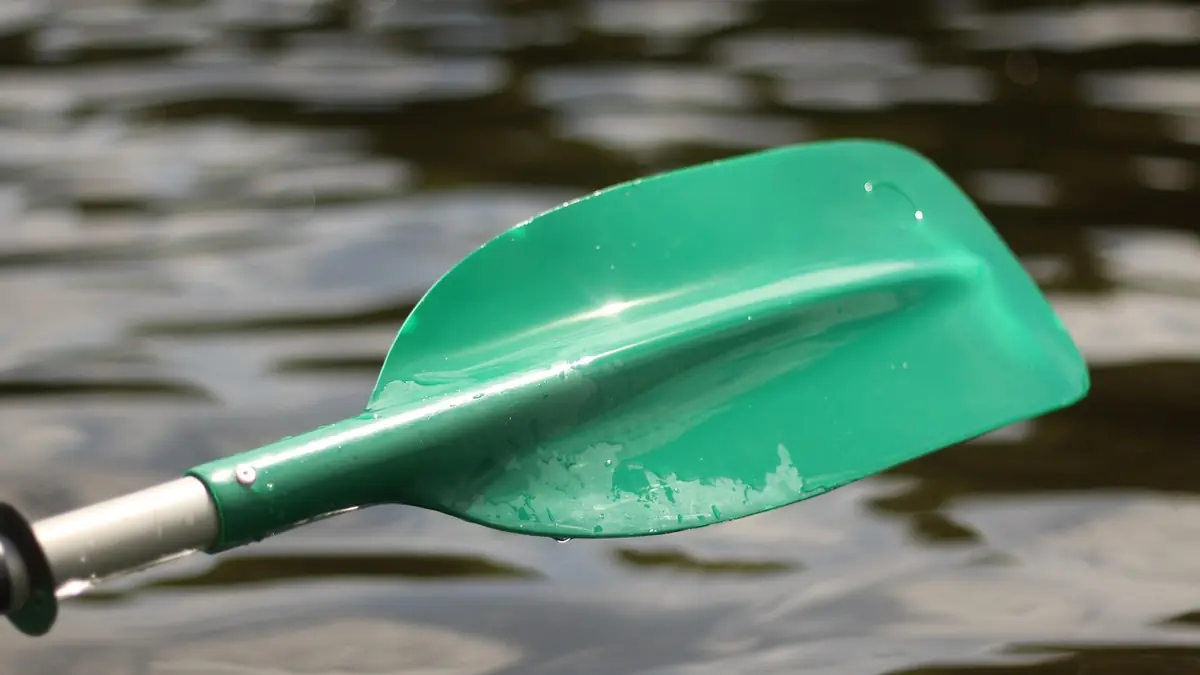
Material drives weight and price. Aluminum shaft with plastic blades runs cheap and survives abuse but feels heavy over a full day. Wood is warm and quiet but needs care. Fiberglass or carbon shafts with nylon or composite blades cut swing weight substantially and are the usual upgrade after a season or two.
Buy one spare paddle per boat. A dropped or broken paddle mid-lake turns a good day into a long, awkward one. Bent-shaft paddles suit flatwater cruising; straight shafts are more versatile for general use and easier to learn on.
- Measure seated height to eyebrows, add 20-24 in
- 54-58 in: most bow paddlers and shorter torsos
- 58-60 in: stern paddlers and taller torsos
- Carry one spare paddle per canoe
Safety Gear: PFD, Bailer, and Communication
A properly fitted PFD is the one item never to compromise on. Look for a paddling-specific vest with a short cut that clears the canoe seat and gunwales, front zip, and at least two adjustment straps. Fit it snug: grab the shoulders and pull up — the vest should not ride above your ears. Test it in shallow water before your first trip.
Canadian regulations require a PFD or life jacket for each person, a sound-signaling device, and a buoyant heaving line of at least 15 meters on most recreational craft. Beyond the legal minimum, carry a bailer or hand pump, a throw bag, and a dry bag for phone and keys. On larger lakes, a waterproof light and a way to check weather matter more than another gadget.
Dress for the water, not the air. Cold lakes in spring and fall demand a wetsuit or drysuit even on warm afternoons, because immersion is the real risk. A dry bag with warm layers, a snack, and a basic repair kit — duct tape, spare cord, a multi-tool — covers most day-trip emergencies.
| Use case | Length | Beam | Hull weight | Typical price (new) |
|---|---|---|---|---|
| Solo flatwater | 12-14 ft | 28-32 in | 40-55 lb | $900-$1,800 |
| Tandem day trips | 15-16 ft | 34-36 in | 55-75 lb | $800-$1,500 |
| Family and gear | 16-17 ft | 35-36 in | 65-85 lb | $900-$1,600 |
| Light composite touring | 15-16 ft | 32-34 in | 38-50 lb | $2,000-$3,500 |
| River and rocky launches | 14-16 ft | 34-36 in | 60-80 lb | $800-$1,400 |
Transport and Storage: Budget for the Boring Stuff
A canoe is only as useful as your ability to move it. Foam blocks and two cam straps secure most hulls on a bare roof rack for under 60 dollars, and they work well for short trips on low-speed roads. A proper cradle-style rack with load-assist bars costs several hundred dollars but makes solo loading realistic for a 70-pound boat.
Storage protects the investment. Polyethylene hulls deform under sustained point loads and heat, so store canoes on padded sawhorses or wide straps, right-side up or upside down, and avoid leaving them in direct summer sun for weeks. Keep them off concrete in freezing weather.
Budget realistically: a used recreational canoe runs roughly 400 to 900 dollars, a new polyethylene boat 800 to 1,500, and a light composite hull 2,000 and up. Add 150 to 400 dollars for paddles, PFDs, and safety gear. If a roof rack is part of the plan, this roof rack setup guide covers the hardware and costs in detail.
Solo vs Tandem: Buying One Boat That Does Both
Many buyers want one canoe for family outings and solo mornings. A 15 to 16 foot tandem can be paddled solo from the stern seat reversed, but it will sit nose-high unless you add ballast or a center seat. A dedicated solo canoe at 12 to 14 feet is far more pleasant to handle alone, at the cost of tandem capacity.
If most of your paddling is solo, buy solo or accept a tandem with a movable center seat. If most is tandem, buy tandem and add a removable center seat later. Trying to force one hull to do everything usually produces a boat that is mediocre at both.
Test paddle before you commit if at all possible. Most retailers and outfitters run demo days, and 20 minutes on the water reveals more about stability, seat comfort, and tracking than any spec sheet. Bring your usual gear load and a paddle you are comfortable with.
- Choose length and beam for your water first: 15-16 ft and 34-36 in beam suits most flatwater paddlers.
- Keep realistic loaded weight 100-150 lb under the hull's maximum capacity.
- Fit the PFD snug and test it in shallow water before relying on it.
- Budget for transport and storage, not just the hull — they decide how often you actually paddle.
Mark has spent years fishing and paddling across rivers and lakes, testing gear in real conditions. He focuses on practical buying advice for beginners and occasional anglers. His goal is to help readers avoid overspending and choose equipment that fits their actual use.