Ice Fishing Gear Checklist: What You Actually Need
By Mark Ellison · Published · 4 min read
Your first ice fishing trip should be about learning the rhythm of the hardwater, not about hauling a sled full of gear you won't use. The essentials fall into three buckets: safety gear that gets you home, clothing that keeps you functional, and a small tackle kit that actually catches fish through a hole.
This checklist is built for a day trip on walkable ice, roughly 4 to 8 inches of clear black ice, with temperatures between 5°F and 30°F. If conditions are outside that window, scale up the safety gear or stay home. Everything below is sorted so you can pack in layers and leave the extras in the truck until you know what you're missing.
Safety Gear You Should Not Leave the Truck Without
Ice picks worn around your neck are non-negotiable. They cost under $20 and give you a way to claw back onto solid ice if you go through. Pair them with a throw rope or a rescue throw bag that has at least 50 feet of floating line. On walkable ice, a simple 50-foot bag clipped to your sled is enough for a partner rescue.
A spud bar or ice chisel is how you check thickness as you walk out. Give the ice three or four solid strikes; if it takes more than one or two hits to break through, it's generally safe to continue, but 4 inches is the usual minimum for a person on foot. A small foam pad or a length of closed-cell foam to kneel on also keeps you off the ice while checking holes.
- Ice picks on a lanyard, worn not stowed
- 50-foot throw rope or rescue bag
- Spud bar for testing ice as you go
- Foam kneeling pad or closed-cell sit pad
- Fully charged phone in a warm inner pocket
Layering for Cold That Comes From Below
Ice fishing cold is different because you're standing still on a heat sink. Start with a moisture-wicking base layer, add a fleece or synthetic midlayer, and finish with a windproof and water-resistant shell. Avoid cotton entirely; once it gets damp from sweat or slush, it stops insulating. Bibs with reinforced knees are worth the upgrade over plain snow pants because you'll kneel on ice repeatedly.
Your feet are the other weak point. Insulated boots rated for -40°F are common, but the bigger factor is keeping them dry. Wear a thin liner sock and a wool sock, and bring a spare pair of socks in a zip-top bag. Gloves are a two-part system: a thin liner for tying knots and handling bait, and a warmer mitten or glove you can slip off quickly. Hand warmers are cheap insurance.
- Wicking base layer, no cotton
- Fleece or synthetic midlayer
- Windproof/water-resistant shell
- Insulated bibs with reinforced knees
- Insulated boots plus spare wool socks
- Glove liners and warm mittens
Shelter, Seating, and Staying Put
A shelter is optional on a mild day but becomes essential in wind or single-digit temperatures. A one- or two-person flip-over shelter or a pop-up hub sets up in a few minutes and traps enough heat that a small propane heater can keep you in a light jacket. If you're going without a shelter, a windbreak and a foam pad to sit on will extend your day considerably.
For seating, a simple bucket with a padded lid is the classic starter setup. It holds tackle, doubles as a seat, and weighs almost nothing. A folding chair is more comfortable but adds bulk. Whatever you choose, bring a small piece of foam or a stadium cushion; sitting on bare ice pulls heat out of you fast and shortens the trip.
- Flip-over or pop-up shelter for wind
- Small propane heater with ventilation
- Bucket with padded lid or folding chair
- Foam cushion or stadium pad
- Windbreak if fishing without a shelter
Auger, Rods, and the Tackle That Matters
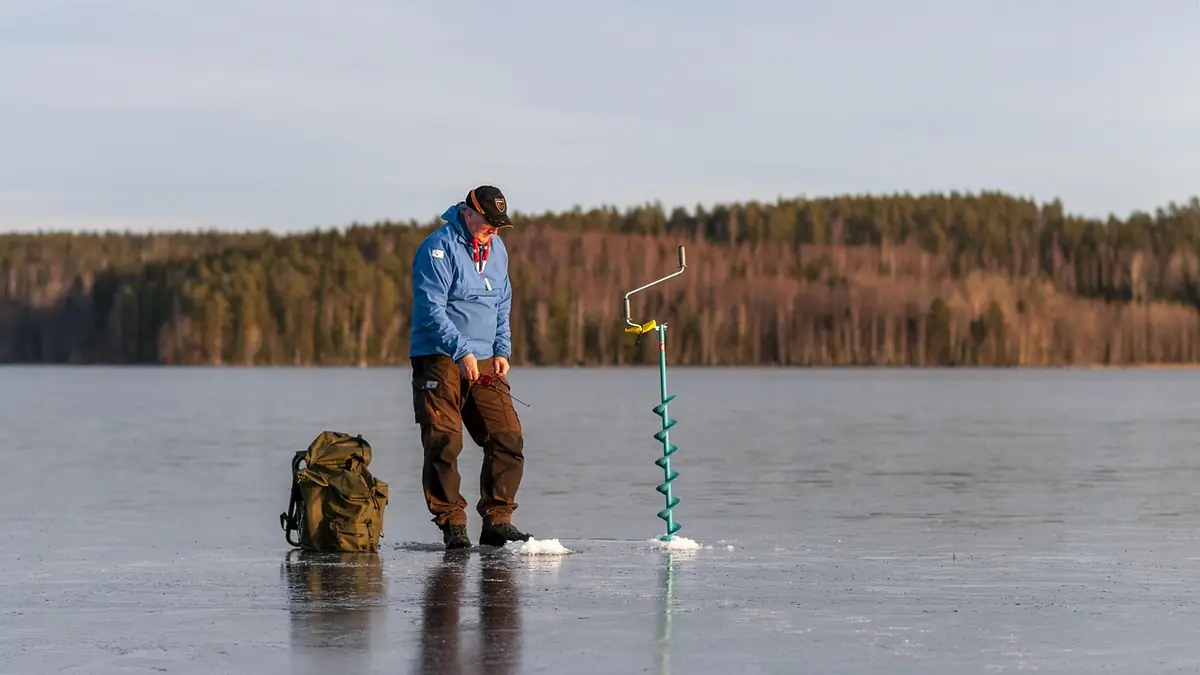
You need a way through the ice. A hand auger in the 6- to 8-inch range is the standard first purchase; it's light, affordable, and cuts fast in less than 12 inches of ice. A cordless drill auger is faster but requires a capable drill and batteries kept warm. For a first trip, borrow or buy a hand auger and drill enough holes to move if a spot goes quiet.
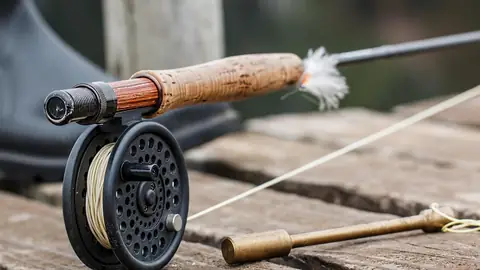
Rods are short, 24 to 36 inches, with light or ultralight actions and spring bobbers or sensitive tips. Two rods are plenty: one for small jigs and one for a larger spoon or minnow rig. Line in the 2- to 6-pound range covers panfish and most walleye. Bring a small selection of jigs, a few spoons, and bait. If you're new to lure selection, use the same logic as open water; our bass fishing lure starter kit breaks down how a small core set covers most situations, and that principle applies on ice too.
- Hand auger, 6-8 inch
- Two rods: light jig rod and spoon/minnow rod
- 2-6 lb line, extra spools
- Small jigs, spoons, and bait
- Spring bobber or sensitive tip
Small Items That Save the Day
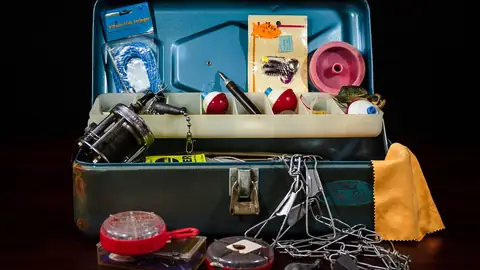
A small tackle box or plano-style box keeps jigs organized and dry. Bring a few split shot, a hook sharpener, and a pair of forceps or needle-nose pliers for hook removal. A headlamp is essential if you stay past sunset or start before sunrise; days are short in ice season, and losing light on the ice is a real hazard.
For warmth and morale, a thermos of hot liquid and a high-calorie snack are worth their weight. A small towel for drying hands and a trash bag for wet gear keep the inside of your shelter livable. If you're fishing from a kayak in cold conditions, review our paddling safety checklist for cold-water specifics; the same respect for immersion applies on ice.
- Headlamp with fresh batteries
- Forceps or pliers and hook sharpener
- Small towel and trash bag
- Thermos and high-calorie snacks
- Basic first-aid kit
| Item | Priority | Typical Cost | Notes |
|---|---|---|---|
| Ice picks | Must-have | $15-$25 | Worn around neck |
| Throw rope (50 ft) | Must-have | $30-$60 | Floating line |
| Spud bar | Must-have | $40-$80 | Check ice as you walk |
| Insulated bibs/boots | Must-have | $100-$250 | Rent or borrow if new |
| Hand auger (6-8 in) | Must-have | $60-$120 | Cuts fast in <12 in ice |
| Shelter (1-2 person) | Nice-to-have | $150-$350 | Essential in wind |
| Flasher/sonar | Nice-to-have | $200-$500 | Skip first trip |
What You Can Leave Home on Trip One
You don't need a flasher, underwater camera, or a power auger for a first trip. Electronics help you find fish, but learning to read a spring bobber and move until you mark fish on a simple sonar unit, if you have one, teaches more. A hand auger and two rods will get you fishing. Save the upgrades until you know you'll go again.
Likewise, skip the giant sled full of duplicates. Pack one small box of tackle, one shelter or windbreak, and one bag of safety gear. If you're towing by hand, keep the sled under 40 to 50 pounds; heavier than that and you'll be exhausted before you drill the first hole. The goal is a comfortable, safe day that makes you want a second one.
- Flasher or camera (optional)
- Power auger (hand auger is enough)
- Multiple shelters or heaters
- Excessive tackle duplicates
- Heavy sled over 50 pounds
- Safety gear (ice picks, throw rope, spud bar) is not optional; wear ice picks and carry a rope every trip.
- Layer for standing still: wicking base, fleece mid, windproof shell, insulated bibs, and dry boots.
- A hand auger, two rods, a small jig box, and a bucket will catch fish on your first trip.
- Leave the electronics and power auger at home until you know you'll go again; keep your sled under 50 pounds.
Mark has spent years fishing and paddling across rivers and lakes, testing gear in real conditions. He focuses on practical buying advice for beginners and occasional anglers. His goal is to help readers avoid overspending and choose equipment that fits their actual use.