Muskie Fishing Tackle: Rods, Reels, and Line That Hold Up
By Mark Ellison · Published · Updated · 5 min read
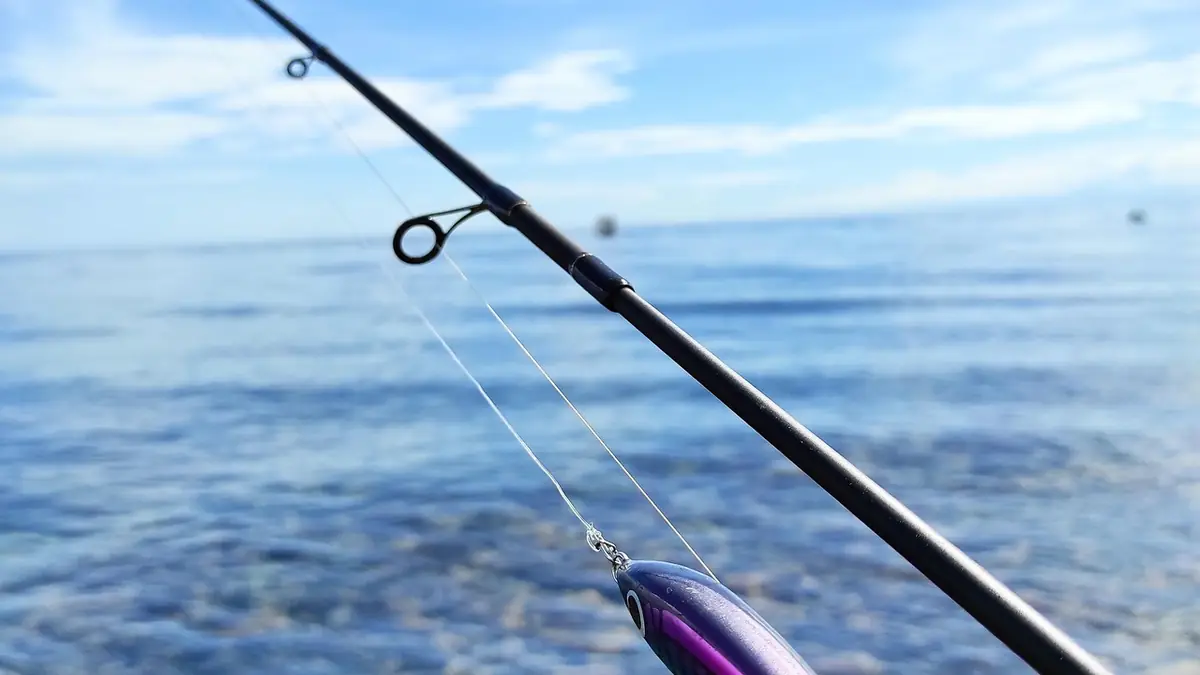
Muskie tackle fails in slow motion: a rod that loads too deep, a reel whose drag fades at the boat, a line that frays on the first figure-eight. The fish are not the problem. The problem is gear chosen for average bass duty and asked to throw eight-inch baits all day.
This guide covers the three pieces that matter most—rod power and action, reel drag and gear ratio, and line plus leader—with numbers you can compare at the counter. Buy once, in the heavy end of the range, and a muskie setup can last a decade of hard casting.
Start With Rod Power, Not Brand
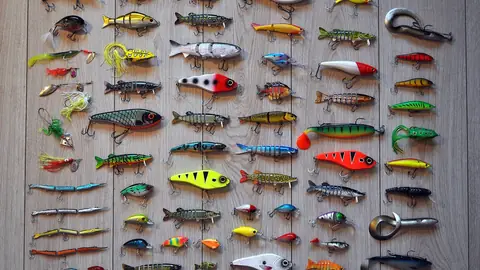
Muskie baits run heavy: a six-inch glide bait often weighs 2–3 oz, big rubber can hit 6–10 oz, and a double-bladed bucktail with a trailer pushes 1.5–3 oz. A rod rated for that range needs a line rating around 20–80 lb braid and a lure rating that actually covers your heaviest bait, usually 2–10 oz for an all-around rod.
Most anglers are better served by one 8'6" to 9' rod rated heavy or extra-heavy than by a light rod they will outgrow. The longer length helps with long casts and figure-eights, but anything past 9'6" gets tiring to cast from a seated position in a smaller boat.
Action matters as much as power. A fast or extra-fast tip loads quickly and casts big baits with less effort, while a moderate action bends deeper and keeps hooks pinned during headshakes. For a first serious rod, fast action with a stiff mid-section is the safer compromise.
- All-around: 8'6"–9', heavy power, fast action, 2–10 oz lure rating
- Big rubber and glide baits: extra-heavy, 6–16 oz rating
- Short rods (7'–7'6") suit close-quarters figure-eights from a kayak
- Check that the reel seat fits your reel foot before buying
Reels: Drag, Ratio, and Line Capacity
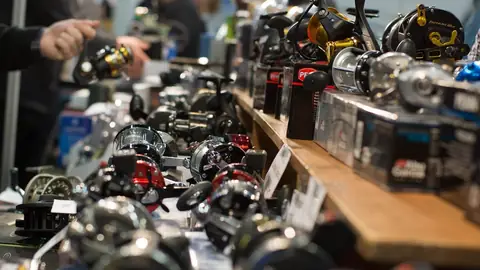
A muskie reel needs a smooth drag that holds 15–25 lb without sticking, and a frame stiff enough that the spool does not flex under heavy cranking. Low-profile casting reels in the 300 size handle most applications; round reels in 400 size are the traditional choice for big rubber and live-bait-style presentations.
Line capacity is easy to underestimate. With 80 lb braid at roughly 0.017–0.019 inch diameter, a 300-size reel holds about 150–190 yards, which is plenty. If you plan to run 100 lb braid or fish deep with heavy leaders, step up to a 400-size frame for margin.
Gear ratio is a preference, not a rule. Reels in the 5.3:1 to 6.3:1 range give torque for big bladed baits and rubber, while 7.1:1 and faster help you pick up slack for walk-the-dog and jerkbait work. Many muskie anglers keep one of each.
- Drag: 15–25 lb usable, smooth at half that setting
- 300-size low-profile or 400-size round for most muskie work
- 5.3:1–6.3:1 for torque on heavy baits
- 7.1:1+ for jerkbaits and topwater
- Look for a rigid frame and a solid anti-reverse—flex shows up fast
Line and Leaders: Where Fish Are Lost
Braid is the standard for muskie. Most anglers run 65–100 lb test, with 80 lb a common middle. Heavy braid does not stretch, so hooksets transmit immediately and baits cast far, but it also means you must set drag carefully and keep a forgiving rod in the mix.
Fluorocarbon leaders protect against abrasion and teeth. A 12–18 inch leader in 80–130 lb fluorocarbon handles most presentations; some anglers go heavier for big rubber. Wire leaders are more abrasion-proof but can affect lure action, so many use them only for specific baits.
Inspect leaders after every fish. Run a thumbnail along the last 12 inches of line and leader; any roughness means cut and retie. That habit alone prevents a large share of break-offs. If you are newer to line materials, our fishing line types compared piece explains how stretch and abrasion resistance differ.
| Bait type | Typical weight | Rod power/action | Line (braid) | Leader |
|---|---|---|---|---|
| Small bucktails, jerkbaits | 0.75–2 oz | Medium-heavy, fast | 50–65 lb | 80–100 lb fluoro, 12 in |
| Standard bucktails, glide baits | 2–4 oz | Heavy, fast | 65–80 lb | 100 lb fluoro, 12–18 in |
| Big rubber, swimbaits | 4–8 oz | Extra-heavy, fast or mod-fast | 80–100 lb | 130 lb fluoro or wire |
| Large glide baits | 6–10 oz | Extra-heavy, moderate | 80–100 lb | 130 lb fluoro or wire |
| Topwater (walkers, prop baits) | 1.5–3 oz | Heavy, fast | 65–80 lb | 100 lb fluoro, 12 in |
Matching the Combo
Balance matters more than total weight. A 9' heavy rod with a 300-size reel should sit with the reel roughly under your hand, not tipping the rod forward. If the tip feels heavy after 20 casts, the reel is too small or the rod too long for your style.
Match lure rating to the baits you actually throw. A rod rated 1–4 oz is a joy with small bucktails and jerkbaits but will feel overloaded with a 6 oz rubber. Keep one combo for light baits and one for heavy, or accept that a single rod will be mediocre at both ends.
Line test should land in the rod's printed range. A rod rated 20–65 lb braid paired with 100 lb braid is over-stressed at the guides and loses casting distance. Read the label, then choose line inside it.
If you are coming from bass gear, our bass fishing lure starter kit is a good reminder of how lure weight drives rod choice—the same logic applies here at three times the weight.
Casting and Figure-Eight Technique
Big baits require an open casting motion. Load the rod with a smooth push-pull rather than a snap, and keep the reel spool tension just tight enough that the bait does not free-fall. A slight thumb ride on the spool prevents fluff without killing distance.
The figure-eight is the most important muskie habit. After each cast, work the bait in a figure-eight at the boat for several passes. Fish often follow and strike at the boat, so keep the rod tip in the water and the line tight through the turn.
Set the hook hard and keep the rod loaded. Muskie mouths are bony, and a soft hookset with a stretchy setup is a lost fish. With braid, a firm sweep is enough; do not add a violent jerk that can tear hooks free.
Net, release tools, and jaw spreaders should be within reach before you cast. A fish held up while you search for pliers is a fish that is out of the water too long.
Budget and Maintenance
A realistic first muskie combo—rod, reel, and line—runs roughly $300–$600 depending on where you buy. Spending more on the reel than the rod is usually the better split, because drag quality and frame stiffness are hard to fake and easy to notice on a big fish.
Maintenance is simple and pays off. Rinse reels after salt or dirty water, back off drag washers between trips, and replace line every season or after heavy use. Braid lasts longer than monofilament but still frays; cut back the last few feet regularly.
Store rods in sleeves and avoid leaving them loaded in a hot vehicle. Heat and constant bend are what turn a straight rod into a noodle. If you paddle to muskie water, our paddling safety checklist and beginner kayak setup cost guide help you plan the boat side of the trip.
When to Step Up to Specialized Gear
If you throw baits over 8 oz regularly, a dedicated extra-heavy rod and a 400-size reel become worthwhile. The same is true for deep, vertical presentations where line capacity and torque matter more than casting distance.
For most anglers, though, one heavy casting combo and one lighter jerkbait combo cover the season. Add specialty gear only after you know which baits you reach for most. Our muskie fishing tackle guide goes deeper on rod and line weights if you want the full breakdown.
Winter fishing is its own gear problem; our ice fishing gear checklist covers the safety and shelter items that matter when the water hardens.
- Buy one heavy 8'6"–9' casting rod rated to at least 8 oz before adding specialty rods.
- Choose a reel with 15–25 lb of smooth drag and a rigid frame; 300 size covers most muskie fishing.
- Run 65–100 lb braid inside the rod's printed line range, with an 80–130 lb fluorocarbon leader.
- Work a figure-eight at the boat every cast and inspect leaders after every fish.
Mark has spent years fishing and paddling across rivers and lakes, testing gear in real conditions. He focuses on practical buying advice for beginners and occasional anglers. His goal is to help readers avoid overspending and choose equipment that fits their actual use.